
OUR TEAM
WEI is a multidisciplinary 501(c)3 organization. Our team is comprised of social workers, criminologists, public policy, and mental health professionals, along with a wide range of specialty field partners.
Founded in 2021, after years of working at premier university research centers with innovators and social scientists researching from multiple disciplines, Wellbeing and Equity Innovations (WEI) was born. Thanks to our team of researchers and practitioners, the need for new, sustainable, and equitable change with a focus on human potential, and with the help of fellow board members, the vision for WEI became a reality.

Carrie Pettus
Chief Executive Officer

Jessica Le
Managing Director, Programs

Rachel Fulmer
Director of Pretrial & Law Enforcement Projects

Angelo Stabler
Project Director for Wellbeing Development

Jennifer Joseph
Training & Communications Specialist

Lila Brodnax
Administrative Assistant

Khadijah Muhammad
Community Liaison

Angi Blakey
Project Manager

Day Atkinson
Project Manager

Rob Frazier
Quantitative Scientist

Matt Marty
Program Specialist

Shereia Harper
Program Specialist

Keri Wayne-Browne
Program Specialist

Natasha Graham
Program Specialist

Katie Morphonios
Senior Data Specialist

Lindsay Eaton
Financial & Operations Specialist
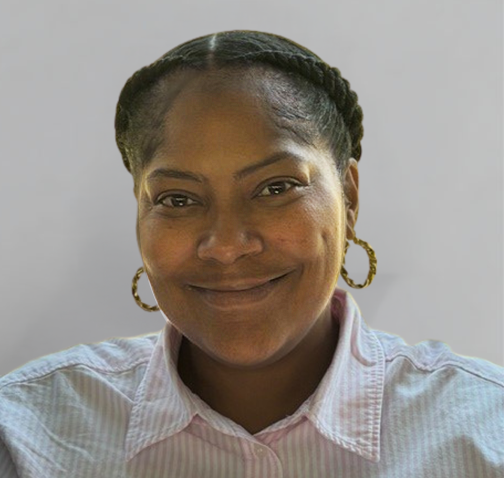
Michele Griffin
Peer Support Specialist
Specialty Field Partners
Chris Candreva
Independent Contractor
John Koufos
Independent Consultant
Nancy McCarthy
Independent Consultant
Ijeoma Nwabuzor Ogbonnaya
Arizona State University
Reuben Philip
Renegade Project
Amberly Pryhodko, LCSW
Prykhodko Psychotherapy & Consulting
Nancy Revell
Sarah Schnauz
Independent Consultant
Faye Taxman, PhD
George Mason University
University Partnerships

DR. CARRIE PETTUS is a visionary social work scholar and innovator dedicated to advancing social equity and justice within criminal, legal, and justice systems. She is the Founder and CEO of Wellbeing & Equity Innovations, a national equity-centered translational research nonprofit that collaborates with justice and community partners to improve outcomes through research-practitioner partnerships. Her work focuses on areas such as diversion and deflection, community violence, social support, trauma, behavioral health, and practices that improve the well-being of individuals, families, and communities.
Dr. Pettus has published over 70 peer-reviewed articles, and her research has been featured in top-tier outlets such as USA Today, The Washington Post, and The Christian Science Monitor. She is a sought-after speaker, having presented at over 150 national and international events and conferences. Throughout her career, Dr. Pettus has demonstrated a remarkable ability to secure millions of dollars in funding to support her impactful work that advances research and initiatives aimed at using science and data to promote wellbeing and social equity. Her dedication to data justice and addressing racial and other social inequities in research is evident in her leadership as the Chair of the Grand Challenges for Social Work.
Dr. Pettus holds a Ph.D. from the University of North Carolina at Chapel Hill School of Social Work, an M.S.W. from the University of Kansas School of Social Welfare, and dual B.A. degrees in Social Welfare and Psychology from the University of Kansas. She has served as a faculty member at Washington University in St. Louis and Florida State University, where she ran research labs and contributed to the advancement of social work education and research.
Dr. Pettus’s contributions to the field have been recognized with numerous awards, highlighting her role as a thought leader. Her work is not just academic; it is a beacon of hope and a catalyst for systemic change, inspiring others to join her in the pursuit of a more equitable and just society. Her research and dissemination efforts have significantly influenced policies and practices at local, state, and national levels, driving systemic change and improving the lives of individuals and families most impacted by criminal legal and justice systems across the United States.
In this clip, Carrie defines equity as equal access to opportunity and explains the key differences between equity and equality.
Ms. Fulmer began her career in victims’ services and crisis response, engaging in collaborations with law enforcement across city, county, and university settings. It is through these various positions that Ms. Fulmer honed her understanding of the dynamic needs of both those who encounter the justice/legal system and those who have initial contact as first responders. Ms. Fulmer also draws heavily on her years in the private sector, where managing public fire safety regulations meant a different type of cross-agency collaboration built on consensus between public and private sectors, often in high-pressure situations.
At WEI, Ms. Fulmer leads project development, implementation, and evaluation for numerous programs that rely on researcher-practitioner partnerships. She is skilled at developing strong teams and achieving meaningful results as emphasized by her oversight of large multi-state projects, stakeholder relationships, and translating research into accessible findings.
Ms. Fulmer holds a M.A. in Criminology and an M.A. in Social Work from Florida State University and a B.A. in Women’s Gender and Sexuality studies from Virginia Commonwealth University.
In this clip, Rachel discusses the far-reaching consequences of incarceration and its impact on both individuals and communities.
JENNIFER JOSEPH is the Training and Communications Specialist at Wellbeing and Equity Innovations. She began her career working within mental health hospitals, where she saw the intersection between mental health and criminal justice. Jennifer grew in her clinical and training skills as she became the Training Specialist for the Institute of Justice Research and Development at Florida State University. Jennifer trained staff on best practices within clinical research practices, as well as training outside organizations on new initiatives within the Criminal Justice System.
Jennifer is passionate about her work because she believes that individuals are more than their criminal justice involvement and everyone deserves to live a life of well-being. Jennifer is trained in several different types of trauma-informed theories and practices, which is a powerful tool when working with justice-involved individuals.
In this clip, Jennifer highlights the importance of using a person-centered, strengths-based approach in the work carried out by WEI.
JESSICA LE is the Managing Director of Programs at WEI. She joined WEI as a Project Director after cultivating her skills in justice research at Justice System Partners and Florida State University’s Institute for Justice Research and Development (IJRD). Jessica began her career working in applied mental health research to explore different treatment paradigms for psychiatric, neurological, and substance disorders while overseeing the clinical care of patients receiving rTMS therapy. Her experience in applied mental health research provided her with a framework to successfully implement long-term complex projects, including research development, planning and implementation, data collection, and project management.
Jessica is driven by her belief that justice research should be rooted in listening to the voices of individuals and communities harmed by systematic oppression, disparities, and inequities.
In this clip, Jessica emphasizes the importance of documenting historical experiences and how the absence of that record can perpetuate harmful and unproductive cycles.
Katie is a native of Tallahassee, Florida, and she enjoys going to the local parks with her dogs.
He has been the recipient of the Kenneth R. Holder Award, Service to Mankind Award, Eastern District of Nebraska Service to Mankind Epsilon Sigma Sigma Award, Jerry Joyce Living Legacy Award, NWU Young Humanitarian Award, and Academic awards. He feels blessed with the opportunity to serve his community and make a difference in this world.
In this clip, Angelo shares his journey as a first-generation graduate and his passion for empowering Native youth through education and community work.
Matt has served as a full-time high school teacher and coach his entire professional career, and recently discovered a passion for reentry programs. His experience in coaching and teaching throughout the US (California, Missouri, Nevada, and Nebraska) has created an appreciation for differences in people, but common ground in values and character in each unique setting. He started work facilitating a reentry program specifically geared toward justice-involved youth and is looking forward to expanding this to a larger population. Parallels between coaching and facilitating reentry programs have proved strong as trust is earned and encouragement to reach full potential is put into action.
KHADIJAH MUHAMMAD is a dedicated social worker with a Master of Social Work (MSW) degree and a passion for empowering individuals, families, and communities. With a strong foundation in trauma-informed care, client advocacy, and community outreach, Khadijah Muhammad brings both compassion and professionalism to every client interaction.
At WEI, Khadijah Muhammad provides direct support services, connects clients to critical resources, and works collaboratively with partner organizations to address systemic barriers. Whether supporting youth in crisis, working with survivors of domestic violence, or helping families navigate housing and food insecurity, Khadijah Muhammad is committed to promoting equity, dignity, and long-term wellbeing.
Khadijah Muhammad believes in the power of empathy and evidence-based practice to foster lasting change—and is honored to walk alongside individuals as they build safer, healthier futures.
She is passionate about creating safe, inclusive spaces where individuals can reflect, connect, heal, and grow through the full range of human experiences and emotions. Keri believes that when we feel respected as individuals, when our experiences are acknowledged, and when we have access to meaningful tools and resources, we all have the capacity to rise beyond our past and become who we choose to be.
ANGI BLAKEY is a Project Manager with Wellbeing & Equity Innovations, bringing more than a decade of experience in mental health, trauma-informed care, and justice reform. With a Master of Science in Psychology and a Bachelor of Science in Criminal Justice, Angi has dedicated her career to supporting individuals and families navigating complex systems, including homelessness, incarceration, and behavioral health challenges
Before joining WEI, Angi served in leadership and program management roles across state and nonprofit sectors, including the Indiana Department of Correction, the Division of Mental Health and Addiction, and the HealthNet Homeless Initiative Program. Her work has centered on developing equitable reentry programs, expanding access to behavioral health resources, and guiding multidisciplinary teams in trauma-informed service delivery
At WEI, Angi leads initiatives that strengthen community partnerships and promote system change rooted in empathy, accountability, and belonging. She is passionate about uplifting marginalized voices, advancing racial and social equity, and helping communities heal through connection and evidence-based collaboration.
SHEREIA HARPER is a Program Specialist at Wellbeing and Equity Innovations, where she brings her passion for helping others and years of hands-on experience supporting children, youth, and adults. With a background that spans child welfare, transitional living, and behavioral health, Shereia has developed a deep understanding of trauma-informed care and youth empowerment. Shereia has dedicated her career to helping individuals build stability and reach their full potential. She is committed to creating safe, supportive environments that foster growth, healing, and wellbeing for all.
LILA BRODNAX is the Administrative Assistant at Wellbeing and Equity Innovations. Lila has worked in administrative support roles, including the American Red Cross Hurricane Recovery Program in TX through a grant-funded program. She later went on to work for a startup company in the Natural Food Industry, where she embraced a multi-faceted role in managing the CEO’s daily schedule, to sales in opening accounts throughout the Denver Metro area. Lila is grateful to be a part of the WEl team and apply her skills in an administrative support role.
DAY ATKINSON is a Project Manager at Wellbeing and Equity Innovations (WEI). Day comes to WEI after years of work at Boys Town in short and long-term congregate care. As a Director of shelter services for youth in the juvenile justice system, Day recognizes the need to provide care for this population, to reduce recidivism, and to provide services for those who might be overlooked.
With a degree in Psychology from Michigan State University and over two decades of experience working with children and families in support, Day has built a foundation of care in trauma-informed settings using need-of-service evidence-based processes. Day is highly skilled in behavioral interventions, using holistic family systems, and creating solutions through empathy and care.
At WEI, Day leads project initiatives that promote individual wellbeing, family healing, and community connection. Day is passionate about social justice, inclusive language, emotional safe spaces, and producing effective outcomes through compassionate care.
Dr. ROBERT FRAZIER is a Quantitative Scientist at Wellbeing & Equity Innovations (WEI), where he contributes to large-scale evaluations, randomized controlled trials, research design, data validation, advanced quantitative analysis, statistical modeling, and rigorous, reproducible analytic processes. An economics-informed statistician and scholar-practitioner, his research interests include behavioral health, substance use, prisoner reentry, workforce reintegration, organizational performance, and multidimensional well-being. His work emphasizes the use of quantitative evidence to evaluate program effectiveness and inform strategy, policy, and practice.
He earned his PhD in Organization and Management with a specialization in Leadership from Liberty University, graduating with High Distinction. He also holds an MBA from Western Governors University, an MPS in Strategic Leadership and a BS in Organizational Leadership from Tennessee Technological University and has completed professional coursework in Inferential Statistics through the London School of Economics and Political Science. He is a Fellow of the Royal Statistical Society and a member of the American Economic Association.
NATASHA GRAHAM, MSW, MEd is a Program Specialist at Wellbeing & Equity Innovations, where she is responsible for coordinating and delivering therapeutic programs and services for individuals who have had contact with the criminal justice system (e.g., prosecutor-led diversion) and their families and children who are also impacted by their loved ones’ justice-system involvement.
Ms. Graham’s career includes over two decades of experience supporting children and adults with factors such as mental health, substance misuse, and developmental delays in a variety of provider settings. She is deeply passionate about using cutting-edge knowledge to best support individuals in maximizing their wellbeing.
Ms. Graham holds a Master’s in Social Work from Indiana Wesleyan University and a Master’s in Secondary Education from Grand Canyon University.
MICHELE GRIFFIN, DHS(c), MHS, LCADC is a Peer Support Specialist at Wellbeing & Equity Innovations, where she serves as an instrumental component of a violence interruption & diversion effort led by the Atlantic County Prosecutor’s Office called the Alternative Prosecution for Positive Outcomes (APPO) program. Ms. Griffin’s primary role is to coordinate and engage alumni participants of the APPO program in an ongoing support group and facilitate these group sessions.
Ms. Griffin also serves as a Program Specialist II for the City of Atlantic City – Office of Reentry Services, focusing on reentry services, program management, behavioral health support, community outreach, and grant-supported initiatives focused on reducing recidivism and improving quality of life for vulnerable populations.
Ms. Griffin holds a Master’s in Human Services from Wilmington University and is currently pursuing a Doctorate in Human Services at Walden University. She is researching juvenile and adult reentry programs, family systems, and community-based interventions that reduce recidivism and improve the quality of life for vulnerable populations.
LINDSAY EATON s a Financial and Operations Specialist at WEI who supports the organization’s financial systems, budgeting, and compliance across multiple projects and funding streams. She brings experience in higher education and nonprofit settings, where she has managed complex budgets and strengthened operational processes. Lindsay is committed to supporting transparent, accountable financial practices that enable teams to advance equitable, community-centered work.
Our Wellbeing Development focus is dedicated to enhancing the behavioral health and stability of individuals and families, particularly those impacted by the criminal legal and justice systems.
We address critical issues such as mental health, trauma recovery, and social support for those navigating the challenges of community stability.
Our initiatives aim to build resilient communities where families are supported, behavioral health needs are met, and individuals affected by the justice system can thrive.
We are committed to advancing Racial Equity within the criminal legal and justice systems by challenging systemic inequities and promoting fair treatment.
Our work involves dismantling barriers that perpetuate racial disparities from initial law enforcement contact to incarceration, sentencing, and reentry, ensuring that race does not determine outcomes in justice, health, or economic stability.
Through research, education, and community engagement, we strive to create a more just and equitable society where everyone has the opportunity to succeed, regardless of their background.
Our Research efforts are focused on the criminal legal and justice systems, rooted in rigorous scientific inquiry, research-practitioner partnerships, and community collaboration.
We conduct randomized controlled trials, causal and qualitative studies, and quality improvement initiatives to generate evidence that informs best practices in justice reform.
By engaging in community participatory research methods, we ensure that our studies are grounded in the lived experiences of those most directly impacted by the justice system, leading to innovative and sustainable solutions that address real-world challenges.